
Loading...
Serving Vero Beach, FL and surrounding areas. (772) 588-1084
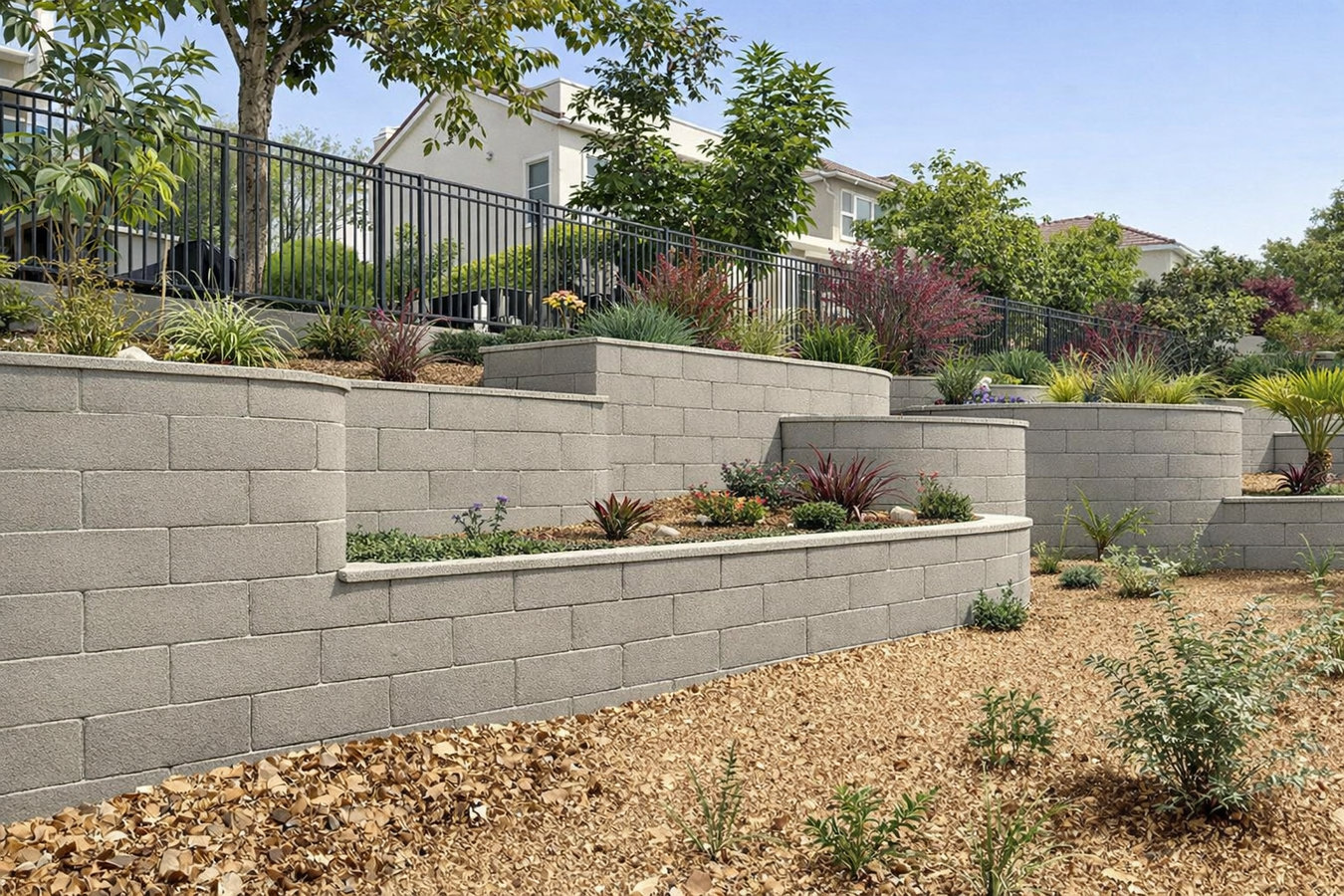
Losing soil every rainy season? A properly built concrete retaining wall holds your yard in place, protects your foundation, and handles Florida's wet summers without cracking or leaning.
Concrete retaining walls in Vero Beach hold back sandy soil that would otherwise erode during heavy rain, redirect water away from your home, and stabilize sloped ground - most residential wall projects take two to five days of active work from excavation to final inspection.
If you are watching your yard lose soil every summer, or if water keeps pooling near your home after storms, a retaining wall is often the most permanent fix. Vero Beach sits on sandy coastal soil that shifts and erodes quickly under the intense June-through-September rainy season, and a properly built wall with good drainage behind it stops that cycle for good.
Many homeowners pair retaining wall work with concrete floor installation when they are also updating an adjacent garage or outdoor structure, since both projects benefit from the same site preparation work.
If you notice bare patches of ground appearing after heavy rain, or if mulch and topsoil keep migrating toward the street or a neighbor's yard, your slope is eroding. In Vero Beach, where summer storms can drop several inches in a matter of hours, this kind of erosion can strip a yard quickly. A retaining wall stops the cycle by holding the soil in place no matter how hard it rains.
When sloped ground has nothing holding it back, rainwater flows toward the lowest point - which is often your home's foundation. If you see standing water near your house after a storm, or if the soil right next to your foundation feels soft and spongy for days after rain, that is a warning sign worth taking seriously. A retaining wall, combined with proper drainage, redirects that water away before it causes damage.
If a hillside or raised bed in your yard looks noticeably different than it did a few years ago - more slumped, more uneven, or with visible cracks in the soil - the ground is moving. This is especially common in Vero Beach's sandy soils, which do not bind together the way clay-heavy soils do. A retaining wall stabilizes the slope before the movement gets worse.
If you already have a retaining wall and you can see it bowing outward, leaning away from the slope, or developing cracks wider than a hairline, it is telling you it is under more pressure than it can handle. Catching this early - before the wall actually fails - is almost always cheaper than dealing with the aftermath. A concrete contractor can assess whether the wall can be repaired or needs to be replaced.
We handle the full scope of retaining wall work for Vero Beach homeowners - from site assessment and permit applications to excavation, footing installation, wall construction, and drainage design, covering both poured concrete and block retaining wall builds. Every project starts with understanding your specific soil and drainage conditions, because building a wall in Vero Beach's sandy coastal soil without proper drainage planning is a shortcut that leads to early failure. We also coordinate with Indian River County's building department so the permit and inspection process does not slow you down.
For yards that need both horizontal and vertical stability, we often recommend pairing retaining wall work with concrete steps construction to create a safe, finished transition between different grade levels - especially useful for homes where the retaining wall creates a step-down to a lower yard area or walkway.
Suits homeowners who want maximum strength and a smooth, clean finish that can be painted or sealed.
A good fit for projects where a textured or segmented look is preferred, or where site access limits the use of concrete forms and poured-in-place methods.
Ideal for yards in Vero Beach's low-lying neighborhoods where water management behind the wall is as important as the wall itself.
For homeowners with an existing wall that is cracking, leaning, or showing signs of pressure buildup - not every situation requires a full replacement.
Vero Beach sits on the Atlantic Coastal Ridge, where much of the soil in Indian River County is sandy and low in clay. Sandy soil drains quickly but also shifts and erodes easily - especially during the intense June-through-September rainy season that brings 50-plus inches of rainfall per year. A retaining wall built without deep footings and proper drainage behind it will feel the pressure of saturated sandy soil every summer and eventually show it through cracking or leaning. That is why we treat drainage design as a core part of every wall project here, not an optional add-on.
We serve Vero Beach and the surrounding area, including Port Salerno and Sebastian. Many Vero Beach neighborhoods - particularly in HOA-managed communities - also require association approval before construction begins, and we help you navigate that process alongside the county permit so there are no surprises when the work is done.
We respond within 1 business day. Retaining wall projects require an in-person site visit before any quote - soil conditions, slope angle, and drainage needs vary too much from yard to yard to price accurately over the phone. You will get a written estimate that breaks down excavation, materials, drainage, and permit fees.
If your wall is two feet tall or higher - which is common for most residential projects - we submit the permit application to Indian River County or the City of Vero Beach before work begins. Permit processing typically takes a few days to a couple of weeks. We handle the paperwork entirely.
The crew marks the wall's footprint and digs down to set the footing - the buried foundation that keeps the wall from tipping. In Vero Beach's sandy soil, this step requires extra care to reach stable ground, and we take the time to do it right. Expect noise and some yard disruption during this phase.
Once the footing is set, the wall goes up and drainage material is installed behind it. After the county inspector signs off, you walk the finished project with us. Any questions about maintenance or what to watch for going forward get answered before we leave.
Free on-site estimate. We handle the permit, the drainage, and the cleanup. No obligation to move forward.
(772) 588-1084We include gravel backfill and drainage outlets as a standard part of every retaining wall we build - not an upsell. In Vero Beach's rainy season, a wall without proper drainage is a wall that will fail. You should never have to ask your contractor whether drainage is included.
We have navigated the Indian River County Building Division permit process for retaining wall projects throughout the area. That means we know what the inspectors look for, we submit complete applications the first time, and we do not cause delays by having to revise and resubmit.
Vero Beach's sandy soil requires deeper, wider footings than dense inland soil to keep a wall from shifting or tipping over time. We set footings to account for local soil conditions - not just to meet minimum code requirements. That difference is what makes a wall last 30-plus years instead of 5.
Many Vero Beach communities require HOA approval before construction begins. We help you understand what your association requires and confirm the wall design meets those guidelines before we pour anything. You get a finished wall that passes both the county inspection and your HOA review. The{' '}American Society of Concrete Contractors (ascconline.org) publishes best practices we follow for residential retaining wall construction.
Every retaining wall we build is designed for where you actually live - not just for what looks good on paper. Vero Beach's soil, rainfall, and permitting requirements shape how we approach every project, and that local knowledge is what separates a wall that holds for decades from one that starts leaning after a wet summer. Learn more about retaining wall standards from the American Concrete Institute and drainage guidance from the Federal Highway Administration.
Replace or install a new concrete slab in your garage, utility space, or living area, with moisture barriers sized for Vero Beach's high water table.
Learn MoreAdd concrete steps that create a safe, finished transition between the grade levels your retaining wall creates.
Learn MoreBefore another rainy season moves more of your yard, call us for a free on-site assessment - we will tell you exactly what the project involves and what it will cost.