Loading...
Serving Vero Beach, FL and surrounding areas. (772) 588-1084
What is underground determines everything above it. Get concrete footings designed for Vero Beach's sandy soil, high water table, and hurricane-code requirements - poured correctly the first time, so your addition or structure holds for decades.
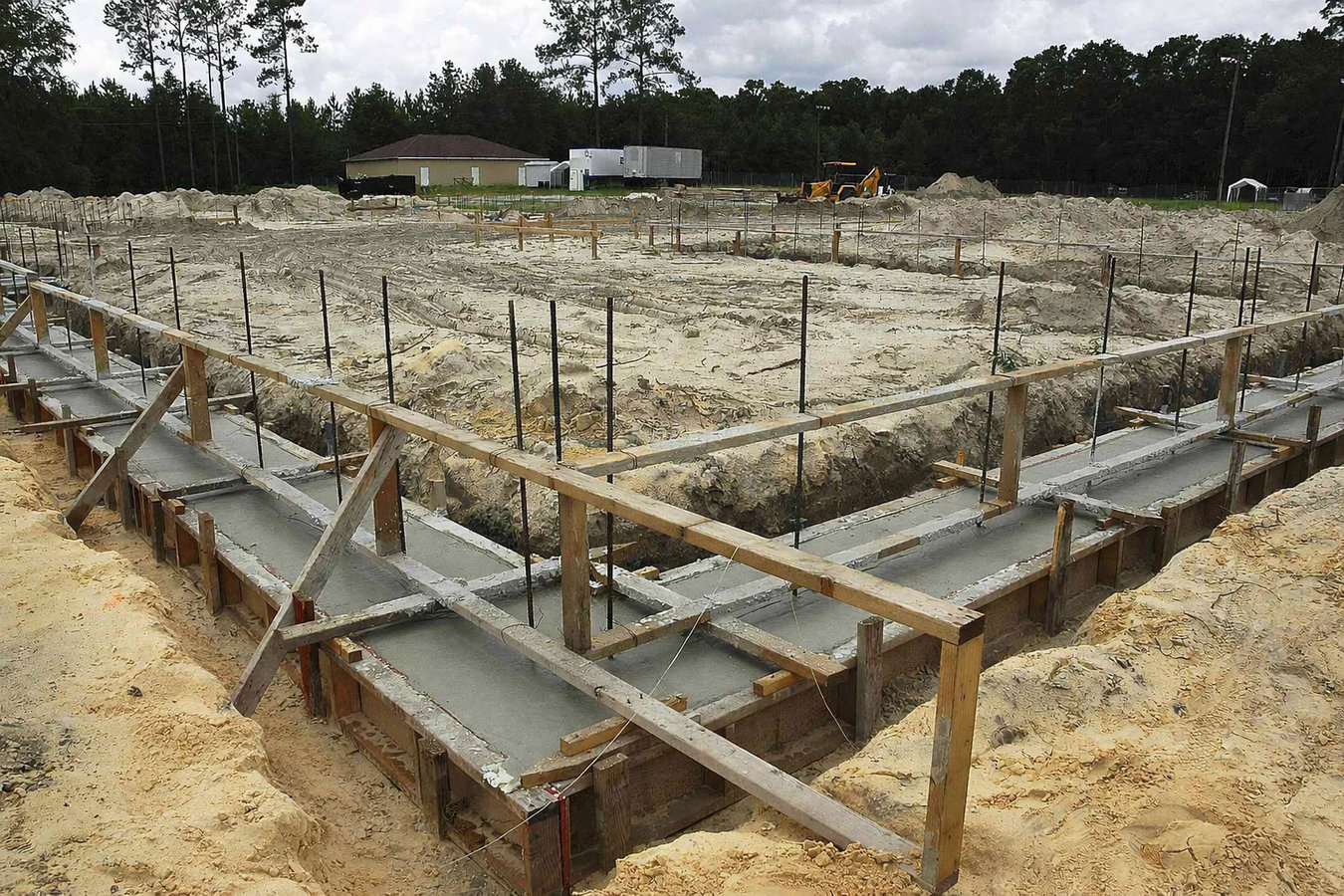
Concrete footings in Vero Beach involve digging trenches or holes to a depth that reaches stable, load-bearing soil, compacting the base, placing steel rebar inside the forms, passing a county inspection before any concrete is poured, and then finishing the pour - most residential footing projects take one to three days of active work, with the full timeline from first call to cured footing running two to four weeks when permits are included.
In Vero Beach, the work that happens before the concrete is poured matters more than most homeowners realize. Sandy coastal soil does not hold a load the way denser soil does - it can compress and shift over time, especially when moisture levels change during the wet and dry seasons. A footing poured on a poorly prepared base may look perfect when the job is done and start showing problems only after a season or two of Florida weather.
If your project is a larger structure - a room addition, a covered porch, or a detached building - that also requires a full concrete slab, see our foundation installation service. We can often combine footing and foundation work under a single permit application and site mobilization, which reduces cost and keeps the schedule clean.
Any addition - a sunroom, a covered lanai, a detached garage, a new deck - needs a proper footing before construction can begin. In Vero Beach, where outdoor living spaces are popular and home additions are common, this is the most straightforward reason to call. If you are getting ready to build anything that will be attached to or supported by the ground, footings are the first step.
If a porch, a set of steps, a fence, or a small outbuilding has started to lean, sink on one side, or show cracks that are getting wider over time, the footing underneath may have shifted or failed. In Vero Beach's sandy soil, this kind of settling can happen gradually and is easy to miss until the problem is significant. A concrete contractor can assess whether the footing needs to be repaired or replaced.
When a footing settles unevenly, the structure above it shifts slightly - and one of the first signs is doors or windows that suddenly do not open and close the way they used to. This is especially worth paying attention to after a wet summer season, when Vero Beach's high water table can cause soil movement beneath shallow or improperly installed footings.
Vero Beach has a significant number of homes built in the 1960s through 1980s, and some of those homes have additions or outbuildings that were never properly permitted. If you are purchasing one of these homes or trying to sell one, a contractor may need to assess - and possibly replace - the footings under those structures to bring them up to current county standards.
We handle every step of concrete footing work in Vero Beach - from the initial site visit and written estimate through Indian River County permit application, excavation, base compaction, form setting, steel reinforcement placement, pre-pour inspection coordination, the concrete pour itself, and final project closeout. We do not start any structural work without a permit in hand, and we do not pour until the county inspector has signed off on the setup. For projects that need both footings and a full slab, we coordinate with our foundation raising work when the existing structure needs to be elevated before new footings are poured - this comes up more often than homeowners expect on properties in Vero Beach's lower-lying neighborhoods.
We also handle assessments for older unpermitted additions - where the goal is to understand what is already in the ground, document it, and determine whether it meets current county standards or needs to be replaced. If you are buying or selling a Vero Beach home with an unpermitted structure, getting a concrete contractor to assess the footings early saves significant stress later in the transaction.
For homeowners adding a sunroom, lanai, bedroom, or other attached space - includes proper tie-in assessment for existing slab and correct sizing for the new load.
For garages, workshops, carports, and outbuildings that need a separate footing from the main home - sized for the intended use and designed for Vero Beach's sandy soil.
For outdoor structures that require individual post footings or continuous footings - designed to the depth and diameter required by Indian River County's current building code.
For older structures or unpermitted additions where the existing footing needs to be evaluated, documented, and potentially replaced to meet current county standards.
Vero Beach is built on sandy coastal soil with a water table that sits close to the surface in many neighborhoods - particularly those near the Indian River Lagoon and on the barrier island. Sandy soil does not carry a structural load the way clay-based inland soil does. It compresses under weight and shifts when moisture levels change, which happens dramatically here between the summer rainy season (roughly 50 inches of rain per year, mostly June through September) and the drier winter months. A footing that was poured without proper base compaction can settle unevenly over a single wet season, pulling the structure above it out of plumb. Florida's building code also requires footings in Indian River County to be engineered for hurricane wind loads - which means specific reinforcement and embedment depth requirements that differ from what you would see in an inland or northern state. These are not optional standards. The county inspector checks them before any concrete can be poured, and a contractor who suggests skipping the inspection is taking a shortcut that will eventually become your problem.
We work throughout Indian River County and surrounding areas, including Sebastian and Gifford. Soil conditions and permit review timelines vary across the county, and knowing what to expect in each area is part of how we keep projects on schedule and on budget.
Call or submit a contact form and describe what you are building and where. We respond within 1 business day and schedule a free on-site visit to look at the location, assess soil conditions, and measure before giving you a written estimate. Phone estimates without a site visit are rarely accurate for footing work.
After the site visit, you receive a written estimate that lists excavation, materials, permits, and labor separately. Once you approve it, we submit the permit application to Indian River County's Building Division. Residential permit review typically takes one to two weeks.
Once the permit is approved, we dig the trenches or holes to the required depth, compact the base, and set the forms. In Vero Beach, this often means compacting sandy soil at the bottom of the trench or pumping out groundwater if we hit the water table. This step is not skipped or rushed.
Steel reinforcing rods are placed inside the forms, then the county inspector visits to sign off before any concrete is poured. Once approved, we pour, level, and finish the concrete. After about a week of curing, the footing is ready to build on. We tell you exactly when that is before we leave.
Permit timelines fill up fast - lock in your start date before the summer rainy season arrives.
(772) 588-1084Every footing we build in Vero Beach goes through the Indian River County Building Division's required pre-pour inspection. The inspector confirms depth, dimensions, and steel placement before we pour a single yard of concrete. This is the step that protects you - it means a licensed professional has verified the work before it is buried permanently.
Sandy coastal soil requires specific compaction steps that inland contractors often skip. We compact the base at the bottom of every trench, address groundwater when we hit it, and use fill material where the native soil is too loose to carry the load. This is the difference between a footing that stays level and one that settles within a few seasons.
Unpermitted structural work in Indian River County creates serious problems when you sell, refinance, or file an insurance claim. We pull every required permit and close out every inspection. When we leave your property, the work is documented, approved, and fully legal - including the paperwork to prove it.
We build weather and permit time into the schedule from the first conversation - not after you have already planned around an optimistic start date. If your project falls during the summer rainy season, we tell you what to expect and give you a schedule that accounts for afternoon thunderstorms and groundwater delays that are common in low-lying parts of Vero Beach.
Concrete footing work is one of the few home improvement projects where cutting corners on the front end creates problems that take years to appear and cost far more to fix than the original savings. The American Concrete Institute sets the technical standards for concrete placement and curing that govern professional footing work. You can verify that any Florida contractor is properly licensed through the Florida Department of Business and Professional Regulation - it takes about two minutes and is worth doing before you sign anything.
Lift and level an existing structure so new or replacement footings can be properly installed beneath it - common for older Vero Beach homes with settled additions.
Learn MoreFull concrete slab foundations for new construction - handles soil prep, moisture barriers, reinforcement, and permitting from raw ground to finished slab.
Learn MorePermit review fills up before the rainy season - reach out now and we will lock in your start date before the summer schedule gets tight.